
Seasonal
Summer Grooming for Miami's Heat and Humidity
A Miami summer is long, hot, and damp. The right grooming routine keeps your dog cooler and more comfortable, and it is almost never a buzz cut. Here is what actually helps, from a salon that has worked through more than twenty South Florida summers.
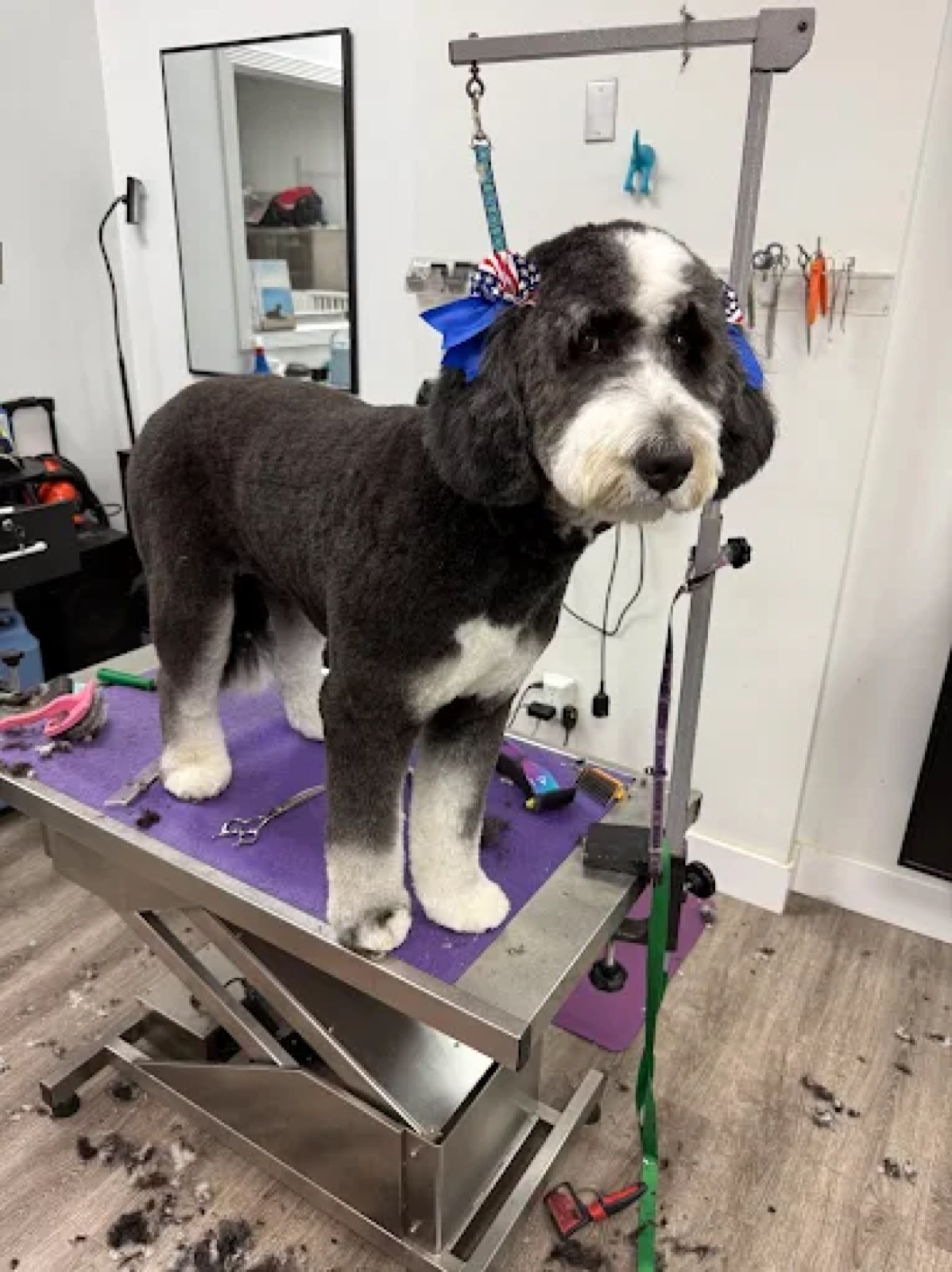
Every June, the same question comes across our table at drop-off: "It's getting so hot, should we just shave him down for the summer?" We understand why people ask. When you are sweating in the parking lot before you even reach the door, it feels like your dog must be miserable under all that fur. But the honest answer surprises most owners. For the majority of dogs, shaving is not the way to keep them cool, and it can actually make the summer harder on them.
We have been grooming Miami Lakes dogs since 2003, which means we have worked through a lot of South Florida summers. We know what the heat and humidity do to a coat, to skin, and to a dog's comfort. This guide walks through what really helps a dog stay cool here, what to skip, and the warning signs that mean it is time to stop grooming and call your vet instead.
Summer prep checklist
Deshed double coats, do not shave them. Keep ears and skin folds clean and dry. Bathe only when needed, not constantly. Walk early or late and check the pavement with your hand first. Keep fresh water everywhere. Never leave your dog in a parked car. Learn the early signs of overheating, and call your vet fast if you see them. Stay on a regular grooming rhythm so the coat never gets ahead of you.
Summer in Miami never really ends
Most grooming advice on the internet is written for places with four real seasons. A dog in Ohio sheds hard in spring, the coat lightens for summer, then thickens again for winter. That cycle does not happen here. Miami stays warm and humid for most of the year, and our "summer" stretches far longer than the calendar says. That changes everything about how we care for coats.
The two forces we fight all summer are heat and moisture, and they work together. Heat alone is manageable. Add our thick, wet air and you get the real problem. Moisture gets trapped against the skin, in dense coats, in ear canals, and in the folds of wrinkly breeds. Warm and damp is exactly the environment that skin problems love. That is why a dog who would be perfectly fine in a dry climate can struggle here without a little extra care.
When moisture sits against the skin too long, you start to see the familiar South Florida summer complaints. Hot spots, which are raw, inflamed patches that can appear and spread within a day. Yeast, which often shows up as itchy skin and that musty, "wet dog" smell that no quick rinse seems to fix. Irritated ears and goopy skin folds. None of these come from your dog being dirty. They come from warm moisture having nowhere to go. Good summer grooming is mostly about keeping the coat and skin clean and dry so that moisture never gets the chance to settle.
The shaving myth, explained one more time
Let's clear up the biggest summer myth, because it leads to more regret than almost anything else we see. A shaved dog is not automatically a cooler dog. For double-coated breeds, shaving usually backfires.
Here is the part many owners never learned. A double coat is not one layer of fur. It is two. There is a soft, fluffy undercoat close to the skin and a longer layer of guard hairs on top. People assume that coat works like a winter jacket that only holds heat in. It does not. That coat is insulation that works in both directions. In the cold it traps warm air to keep your dog warm. In the heat it slows the hot air down and shades the skin, which keeps your dog cooler than bare skin would. It works a little like a thermos that keeps a drink hot or iced.
When you shave a double coat down to the skin, you remove that natural protection. Now the sun reaches skin that has never been exposed, which raises the risk of sunburn and overheating, not the other way around. Worse, the undercoat and guard hairs often grow back at different rates and different textures, so the coat can come back patchy and fuzzy and never quite return to normal. We have met a lot of "I shaved him one summer and his coat was never the same" dogs over the years. It is a real thing, and it is hard to undo.
Goldens, German Shepherds, Huskies, Australian Shepherds, Pomeranians, and the many doodle and mountain-dog mixes all carry versions of a double coat. For all of them, the summer move is deshedding, not shaving. If you want the full breakdown for one of the most common double coats we see, our guide to Golden Retriever grooming and deshedding digs into exactly why the brush, not the clipper, is the tool that keeps these dogs comfortable.
Shave or deshed?
Double coat (Golden, Husky, Shepherd, most doodles): deshed, never shave to the skin. Single coat or long silky hair (Poodle, Yorkie, Shih Tzu, Maltese): a sensible shorter trim is fine and often helps. Not sure which one you have? That is exactly the kind of thing we will tell you straight at drop-off.
What actually keeps a dog cool: regular deshedding
If shaving is off the table for double coats, what is the answer? Deshedding. This is the single most useful summer service for the thick-coated dogs of South Florida, and it is very different from a haircut.
Deshedding means pulling out the dead, loose undercoat that your dog is constantly shedding but cannot fully release on its own. Think of it like emptying out the stuffing that has come loose inside a jacket. The outer coat, the part that shades and protects, stays right where it belongs. What comes out is the soft, dead fluff underneath that traps heat against the body and holds moisture like a sponge.
A good deshedding session does several things at once. It thins out that heat-trapping layer so air can move through the coat, removes the damp undercoat that yeast and hot spots feed on, and cuts way down on the hair drifting across your floors. All of it makes a real difference in how your dog feels in the heat, without ever exposing the skin. Most double-coated dogs here do well with a deshedding visit every six to eight weeks, and since our warm months never really stop, that becomes a year-round rhythm. You can see how we handle deshedding within our grooming services, which all include nails, ears, glands, and teeth.
Sensible trims for coated breeds
Not every dog is double coated, and for some dogs a shorter summer cut is genuinely a good idea. Single-coated and continuously growing coats are a different story than the thermos-style double coat.
Poodles, doodles with poodle-dominant coats, Bichons, Yorkies, Shih Tzus, and Maltese have hair that keeps growing, much like ours. There is no protective undercoat to ruin, so a shorter, neat summer trim can help these dogs stay cool and stay cleaner. A tidy length means less hair to trap heat and humidity, fewer tangles after a swim or a romp in the yard, and a coat that dries faster after every bath. It also makes brushing at home far easier, which matters a lot in a climate where mats can form quickly.
The key word is sensible. A shorter trim does not mean scalped to the skin. We aim for a length that keeps the dog comfortable and still leaves enough coat to protect against sunburn and to look like the breed. If your dog tends to get matted in the heat, going a little shorter in summer is a smart, kind choice. Our guide to grooming frequency goes deeper on how coat type sets the right schedule, which matters even more once summer is in full swing.
Keep the ears and skin folds dry
This is the quiet hero of summer grooming, and it is the one most owners underestimate. In our humidity, the warm, damp spots on a dog's body are where trouble starts. Two of the most common are the ears and the skin folds.
Ears. A dog's ear canal is warm, dark, and curved, so moisture likes to linger there. Add a humid climate, plus dogs who swim or get bathed often, and you have a recipe for irritation. Floppy-eared breeds like Cocker Spaniels, Basset Hounds, and many doodles have it the hardest because the ear flap seals the moisture in. Part of every groom with us is checking and cleaning the ears, and we always make sure they are dry before your dog goes home. At home, after any swim or bath, gently dry the ears.
Skin folds. Wrinkly breeds like French Bulldogs, English Bulldogs, and Pugs have adorable folds that also happen to be perfect little pockets for trapped moisture. In Miami summers those folds need regular attention, because sweat, humidity, and everyday grime collect in them and can quickly turn into irritation. Keeping the folds clean and dry is simple but it has to be consistent. We tend to these areas during a groom, and we are happy to show you how to keep them fresh between visits.
None of this is glamorous, but it prevents far more summer skin problems than any haircut ever will. Clean and dry beats short and shaved every single time in our climate.
More baths, but only if your dog actually needs them
Summer is when dogs get into more stuff. The beach, the pool, the backyard sprinkler, the muddy patch after an afternoon storm. So it makes sense that they may need baths a little more often this time of year. Salt water and chlorine in particular should be rinsed off, because they dry out the skin and coat if they sit.
But here is the balance to keep in mind. Over-bathing causes its own problems. A dog's skin relies on natural oils, and washing too often strips those oils away, which leaves the skin dry, itchy, and more prone to irritation. That is the opposite of what you want when the humidity is already stressing the skin.
So the rule is simple. Bathe when your dog is actually dirty, smelly, or has been in salt or chlorine, and rinse thoroughly. If your dog has sensitive or itchy skin, set the right bathing schedule and shampoo with your groomer and your vet together rather than guessing. And whatever you do, dry your dog properly, especially the undercoat, ears, and folds. A coat that goes back outside damp is an invitation for the summer skin issues we are trying to avoid.
Watch out for hot pavement and paws
Coats get all the attention, but paws take a real beating in a Miami summer, and they are easy to forget. Sidewalks, asphalt, pool decks, and the metal of a car can get shockingly hot under our sun. Surfaces that feel fine to you in shoes can be hot enough to burn the soft pads on a dog's feet.
There is a quick test that takes five seconds. Press the back of your hand flat against the pavement and hold it there for about seven seconds. If it is too hot for your hand to stay comfortable, it is too hot for your dog's paws. When in doubt, walk on grass, stick to shaded paths, or move your walks to early morning and the evening after the sun has dropped. Those cooler hours are better for the whole dog, not just the feet.
Grooming helps paws too. We keep the fur between the pads neatly trimmed so sand, grass seeds, and debris cannot pack in and cause irritation, and we keep nails at a healthy length so your dog stands and walks comfortably. Tidy paws are more comfortable paws, and in summer that small detail matters more than people expect.
Hydration, shade, and the car rule
Grooming is only one part of a comfortable summer. The basics of heat safety matter just as much, and they are worth saying plainly.
Keep fresh, cool water available everywhere your dog spends time, indoors and out. On hot days dogs drink more, and a dog that runs out of water in the yard can get into trouble fast. Make sure there is always real shade outside, not just a spot that bakes by noon. If your dog is older, overweight, very young, or a flat-faced breed like a Bulldog, Pug, or Frenchie, be extra careful, because these dogs handle heat far worse than others.
And the one rule that has no exceptions: never leave your dog in a parked car, not even for a minute. The inside of a car heats up to dangerous, even deadly, temperatures shockingly fast, even with the windows cracked and even on a day that does not feel that hot to you. There is no quick errand worth the risk. If your dog cannot come inside with you, leave them safely at home.
Know the early signs of overheating, and when to call your vet
This is the most important section in this whole article, so please read it closely. We are groomers, not veterinarians. We can keep your dog comfortable, but we cannot diagnose or treat a medical problem, and overheating is a medical problem. Heatstroke is a true emergency, and it is not something grooming can fix.
Dogs do not sweat the way people do. They cool themselves mostly by panting and a little through their paw pads, and that system can be overwhelmed quickly in our climate. Knowing the early warning signs can save a dog's life. Watch for things like:
- Heavy, frantic panting that does not slow down.
- Drooling more than usual, or thick, sticky drool.
- Bright red or very dark gums and tongue.
- Weakness, wobbling, stumbling, or trouble standing.
- Vomiting or diarrhea.
- Confusion, glassy eyes, or collapse.
If you see these signs, treat it as the emergency it is. Move your dog to a cool, shaded, or air-conditioned spot right away. Offer small amounts of cool, not ice-cold, water. You can wet the paws, belly, and ears with cool water to start bringing the temperature down. Then call your veterinarian or the nearest emergency vet immediately, even if your dog starts to seem better. Internal damage from overheating is not always obvious from the outside, and a vet needs to check. When it comes to heat and your dog's health, always err on the side of calling your vet. We would rather you make a call that turns out to be nothing than wait on one that turns out to be serious.
Staying on schedule is the real summer secret
Here is what twenty-plus years of South Florida summers have taught us. The dogs who sail through the season comfortable and healthy are almost always the ones on a regular grooming rhythm. When a dog comes in every few weeks, the coat never gets ahead of you. The undercoat stays thinned out, the ears and folds stay clean and dry, the nails stay short, and small problems get caught while they are still small.
The dogs who struggle are usually the ones who come in only when things have already gone wrong. A matted coat trapping heat and moisture against the skin. A hot spot that has been brewing for a week. Ears that needed attention a month ago. By that point the kind choice is sometimes a much shorter cut than the owner wanted, simply because the coat has drifted too far. Summer is the season when staying ahead matters most.
That is exactly why so many of our families use the Paws Membership. It locks in a regular rhythm so your dog stays fresh all summer without you having to remember to book. Members come weekly with no appointment needed, mobile grooming is included, and there is a discount on boarding for member families. Membership starts at $140 a month, and for a thick-coated dog in a Miami summer it is the easiest way we know to keep them comfortable and skip the surprise "we had to shave him" visit. If getting to the salon is the hard part, members can also use our members-only mobile grooming, where we bring the full setup to your driveway across Miami Lakes, Hialeah, Pembroke Pines, and Miramar.
The short version
A Miami summer is a marathon, not a sprint, and your dog feels every hot, humid day of it. The grooming that helps is rarely the dramatic buzz cut owners reach for. It is the steady, sensible care that keeps the coat working the way nature built it. Deshed the double coats instead of shaving them. Give single-coated and long-haired dogs a sensible trim. Keep ears and skin folds clean and dry. Bathe when needed and dry thoroughly. Mind the hot pavement, the water bowl, the shade, and the car. And learn the signs of overheating so you can act fast and call your vet, because that part is never a grooming job.
Do those things and stay on a regular schedule, and your dog will be far more comfortable through the long Florida heat. If you want a hand setting that up, that is what we are here for. Bring your dog by and we will look at the coat, the skin, the ears, and the paws, and give you a straight plan for the season.
Frequently asked questions
How do I keep my dog cool during a Miami summer?
Start with shade, fresh water, and walks early in the morning or after sunset when the pavement is cooler. Regular grooming helps too. Deshedding removes the dead undercoat that traps heat, and keeping ears and skin folds clean and dry prevents the irritation that humidity causes. Never leave your dog in a parked car, even for a minute.
Should I shave my dog for the summer?
For most double-coated breeds, no. That coat insulates against heat as well as cold, and shaving it can leave the skin exposed and may change how the coat grows back. The better choice is regular deshedding to pull out the dead undercoat. For some single-coated or long-haired dogs a sensible summer trim can help, so ask your groomer what suits your dog's coat.
How can I tell if my dog is too hot or having heatstroke?
Heavy panting, drooling, bright red gums, weakness, stumbling, vomiting, or collapse can be signs that a dog is dangerously overheated. Heatstroke is a medical emergency, not a grooming problem. If you see these signs, move your dog to a cool place, offer water, and call your vet right away. We are groomers, not vets, so when in doubt always check with your veterinarian.
Does my dog need grooming more often in the summer?
Often, yes. Miami's heat and humidity run year-round, so dogs hold moisture in thick coats and shed steadily all twelve months. Many local dogs do well with slightly more frequent deshedding, baths, and hygiene trims in the warm months. We can set a simple summer schedule for your dog's coat at drop-off.
Ready for a cooler, comfier summer?
We have kept Miami Lakes dogs comfortable through more than twenty South Florida summers. Bring yours in and we will set the right summer routine for their coat and skin.